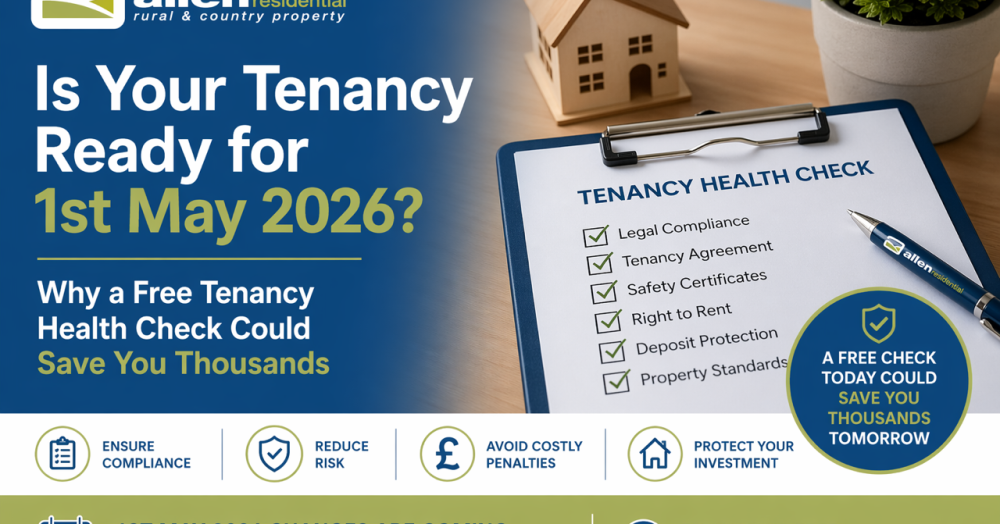
Is Your Tenancy Ready for 1st May 2026?
Why a Free Tenancy Health Check Could Save You Thousands The rental landscape is about to undergo one of its most significant transformations in a generation. With the Renters’ Rights Act coming into force on 1st May 2026, landlords across the UK face a clear choice: adapt early or risk costly non-compliance.
At a surface level, legislative reform is nothing new. But from a sociological perspective, this shift reflects a deeper rebalancing of power within the private rented sector, placing greater emphasis on tenant security, transparency, and accountability. In practical terms, that means your current tenancy setup, however well-managed, may no longer meet the required standard.
The Changing Social Contract Between Landlord and Tenant
For decades, the private rented sector has operated on a relatively flexible model.
However, rising tenant demand, affordability pressures, and increased scrutiny on housing standards have driven policy in a new direction.
The incoming reforms aim to:
- Strengthen tenant rights and security of tenure
- Raise minimum compliance and safety standards
- Increase accountability for landlords and agents
This is not simply regulatory tightening; it is a structural shift. Landlords are now expected to operate with the same procedural rigour as regulated businesses.
Where Landlords Are Most at Risk
In our experience, even diligent landlords can fall short in areas such as:
- Documentation gaps (missing or outdated compliance certificates)
- Incorrect tenancy structures that will not align with new legislation
- Unserved or improperly served prescribed information
- Rent levels and review mechanisms that may not hold up under scrutiny
- Process failures in how tenancies were originally set up
These issues often go unnoticed, until they become expensive problems. From restricted possession rights to financial penalties, the consequences of non-compliance are no longer minor administrative setbacks.
Introducing Our Free Tenancy Health Check
To support landlords through this transition, we are offering a complimentary Tenancy Health Check. A structured, professional review of your current tenancy setup.
This is not a generic checklist.
It is a detailed compliance audit designed to:
- Identify gaps against the upcoming legal framework
- Assess your tenancy documentation and structure
- Highlight risks that could impact possession or income
- Provide clear, practical steps to bring your property in line
Why Act Now?
Waiting until after 1st May 2026 could significantly limit your options.
Acting before allows you to:
- Retain greater control over your tenancy arrangements
- Make adjustments before restrictions tighten
- Avoid reactive, high-cost compliance fixes
- Protect both your asset and your rental income
More importantly, early action positions you as a professional landlord operating ahead of the curve, not one scrambling to catch up.
A Professional Approach to a Changing Market
The most successful landlords in today’s market are not just property owners, they are operators of a regulated service. Compliance is no longer a back-office function; it is central to profitability, risk management, and long-term success.
Our Tenancy Health Check is designed to give you clarity, confidence, and control in a rapidly evolving sector.
Book Your Free Tenancy Health Check Today
If you are unsure whether your current tenancy would withstand scrutiny under the new legislation, now is the time to act.
Get in touch with our team today to arrange your Free, no-obligation Tenancy Health Check and ensure you are fully prepared for 1st May 2026.
Contact either our Paulton office (01761) 412 300 or Wells Office (01749) 672678 or email lettings@allen-residential.co.uk
